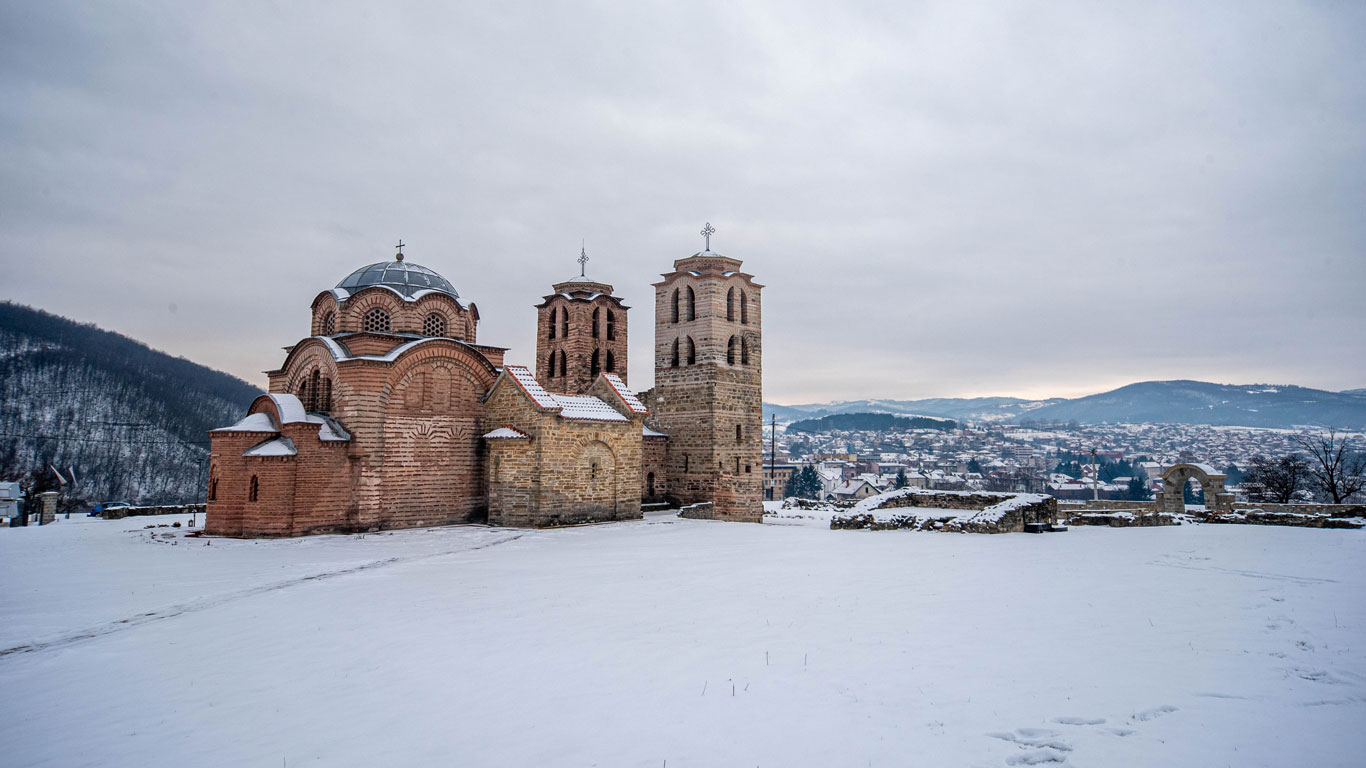
Monastery of Saint Nicholas
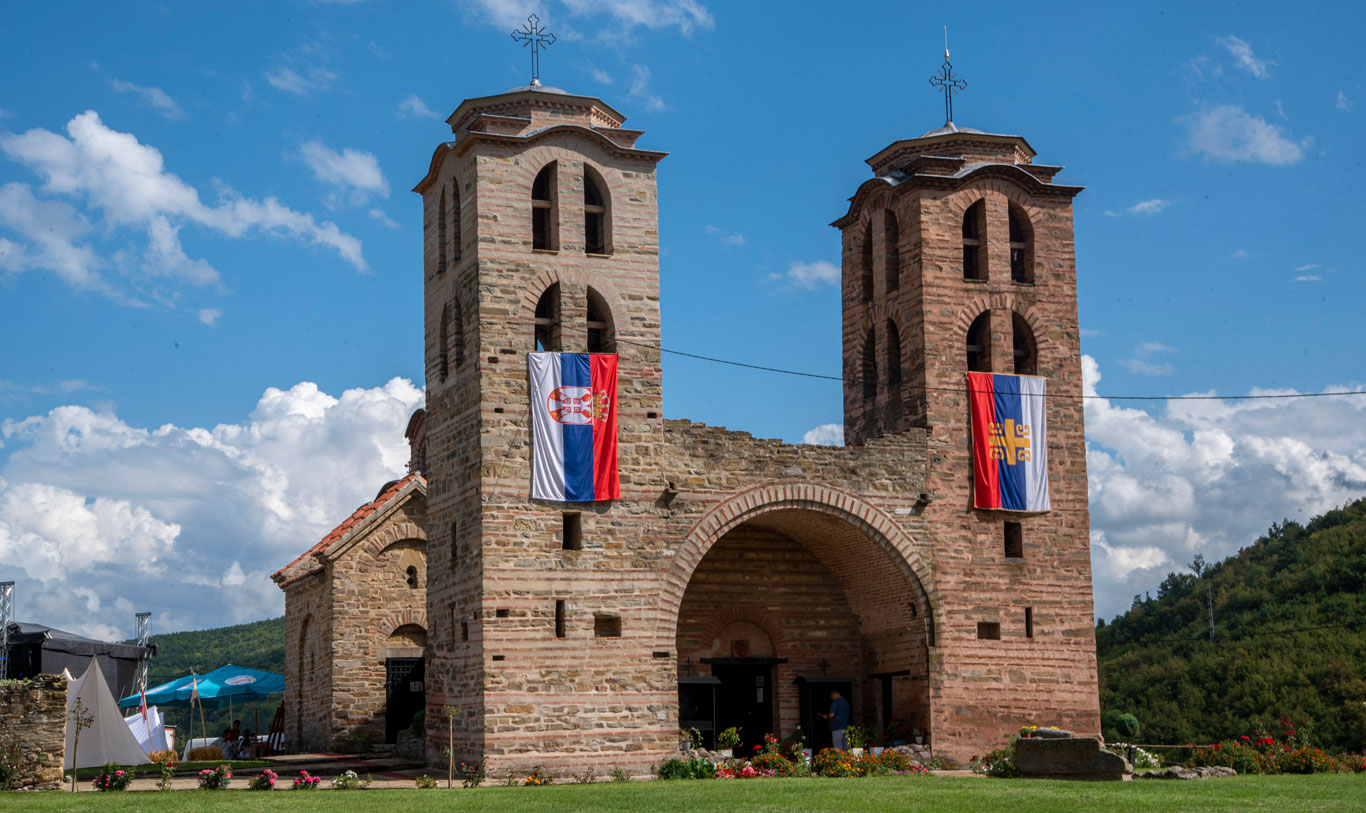
The Monastery of Saint Nicholas is located in the eastern part of present-day Kuršumlija, on a high plateau above the confluence of the Banjska River and the Toplica River. It is the oldest endowment of Stefan Nemanja (1166–1196), who, together with the nearby Monastery of the Holy Virgin, built it between 1159 and 1166 in the Toplica region, where he ruled as an appanage prince. The church is a single-nave structure with a segmented dome, built in the style of Constantinople endowments from the period of the Byzantine Komnenos dynasty. The altar area is divided into three sections, while on the southern side a special annex was built containing a tomb intended for the burial of the founder.
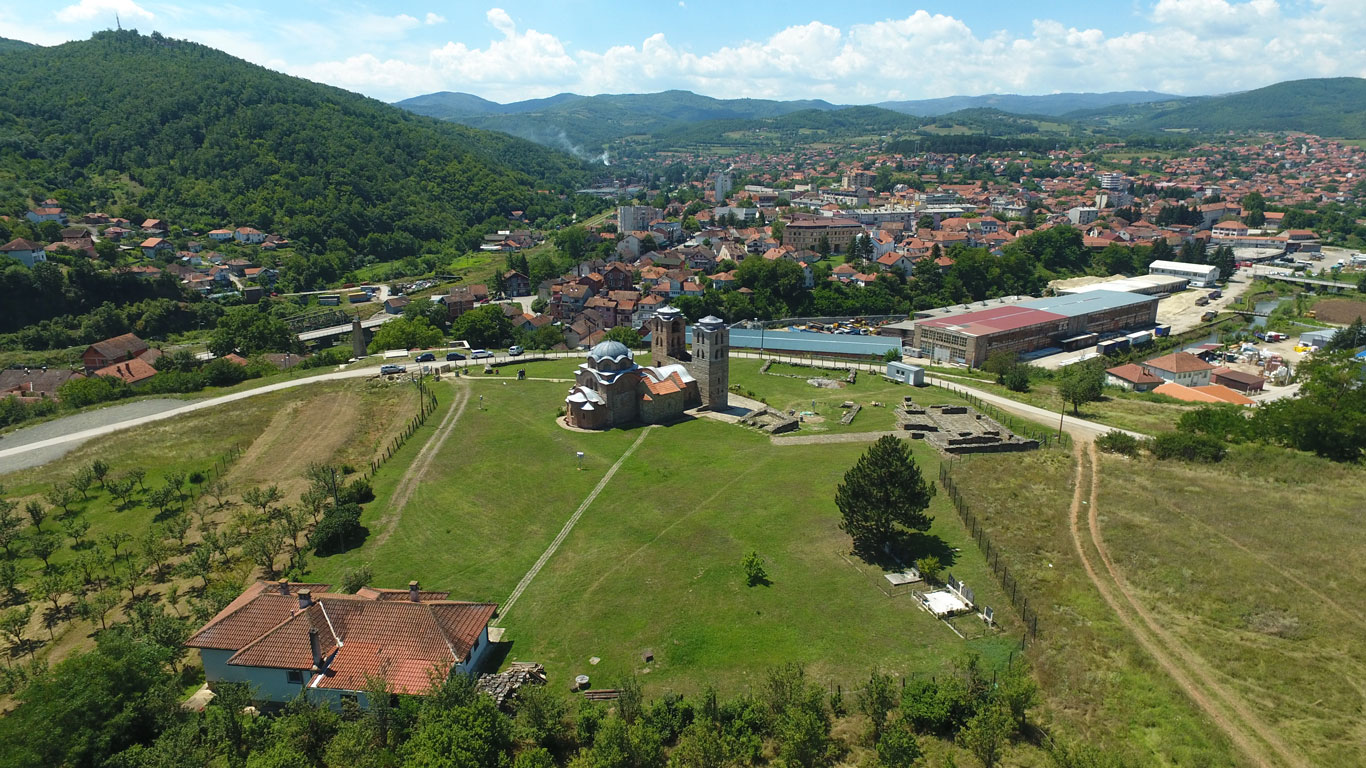
During the reign of Stefan the First-Crowned (1196–1227), an exonarthex (porch) with two tall bell towers was added to the western side of the church. After the Serbian Orthodox Church gained autocephaly in 1219, the monastery became the seat of the Toplica Bishopric, and for a period also the seat of a metropolitanate. During the reign of King Milutin (1282–1321), a chapel was added to the northern side of the church.
The monastery remained active until the Great Migration of the Serbs in 1690, after which a period of decline and destruction began. In the mid-19th century, the monastery was devastated by Sulj Krveš and Mula Halil while searching for treasure. Although the church was once fully fresco-painted, only a few fragments survive today. Archaeological excavations at the site confirmed the existence of an ancient and medieval necropolis, as well as remains of the monastery complex (tower, refectory, and bishop’s palace).
The Monastery of Saint Nicholas has been declared a cultural monument of exceptional importance and represents one of the most significant churches in Serbian medieval history.
The First Endowments of Stefan Nemanja
Stefan Nemanja, the founder of the Nemanjić ruling dynasty and creator of the medieval Serbian state, began his political, military, and architectural legacy in present-day Kuršumlija.
Stefan Nemanja was born in Ribnica (present-day Podgorica) in 1113 as the youngest son of the Serbian nobleman Zavida, and died on February 26 (13), 1199, in the Serbian monastery of Hilandar in Greece. His descendants were Vukan, Stefan, and Rastko (Saint Sava). At that time, Byzantium was ruled first by Emperor Manuel I Komnenos (1143–1180), and later by Isaac Angelos (1185–1195). Nemanja’s biographers included Saint Sava, Stefan the First-Crowned, and Domentijan.
When he came of age, Nemanja received as an appanage prince the administration of the regions around Toplica, Ibar, Rasina, and Reka. It is believed that the seat of his principality was located in the area of Toplica, that is, present-day Kuršumlija.
During the meeting between Nemanja and Byzantine Emperor Manuel Komnenos in Niš in 1159, the emperor granted Nemanja the “imperial dream,” a court dignity, and then bestowed upon him the župa of Dubočica (the area around present-day Leskovac) for him and his heirs to enjoy. Strengthened in power and prestige, he began building monasteries in his capital, which led to conflict with his brothers. In Kuršumlija, he built his first two endowments: the Monastery of Saint Nicholas and the Monastery of the Holy Virgin. Both monastery churches were covered with lead plates that reflected a white glow in the sunlight, giving the place the name “White Churches.”
In the struggle for power with his brothers (Tihomir, Stracimir, and Miroslav), Nemanja emerged victorious and became GRAND ŽUPAN in 1168, after which he moved the seat of the state to Ras. He ruled until 1196, when he handed the throne over to his middle son Stefan and became a monk (Simeon, later Simeon the Myrrh-streaming) on Mount Athos, in his endowment Hilandar, where he died at the age of 86.