
Church of the Transfiguration of the Lord
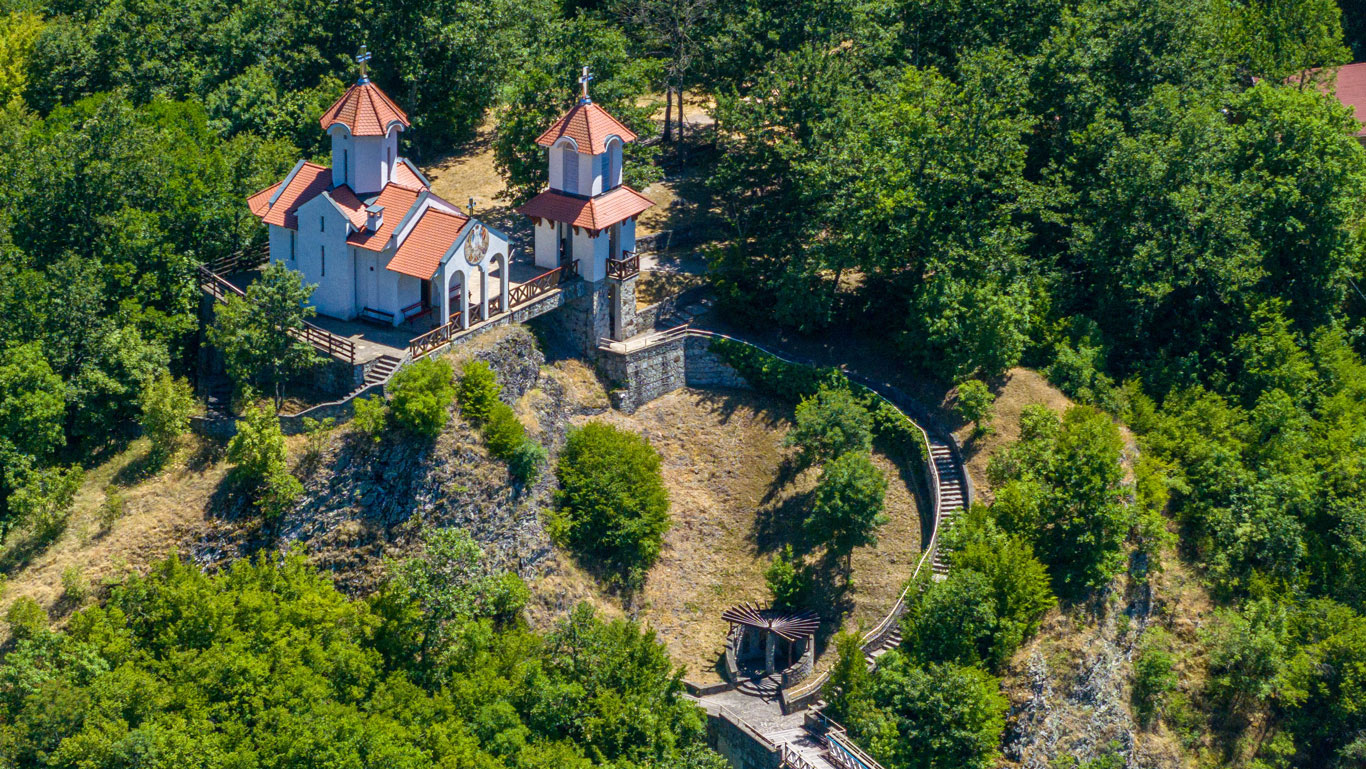
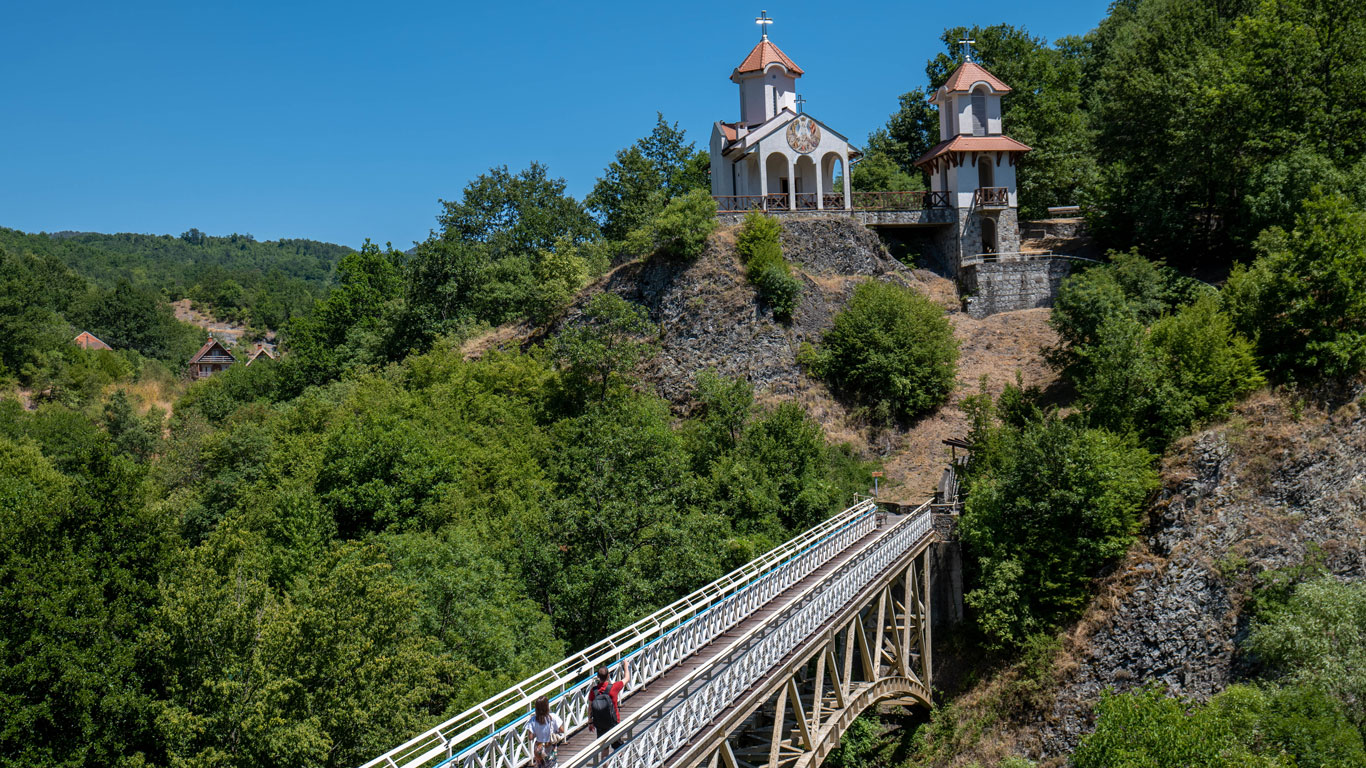
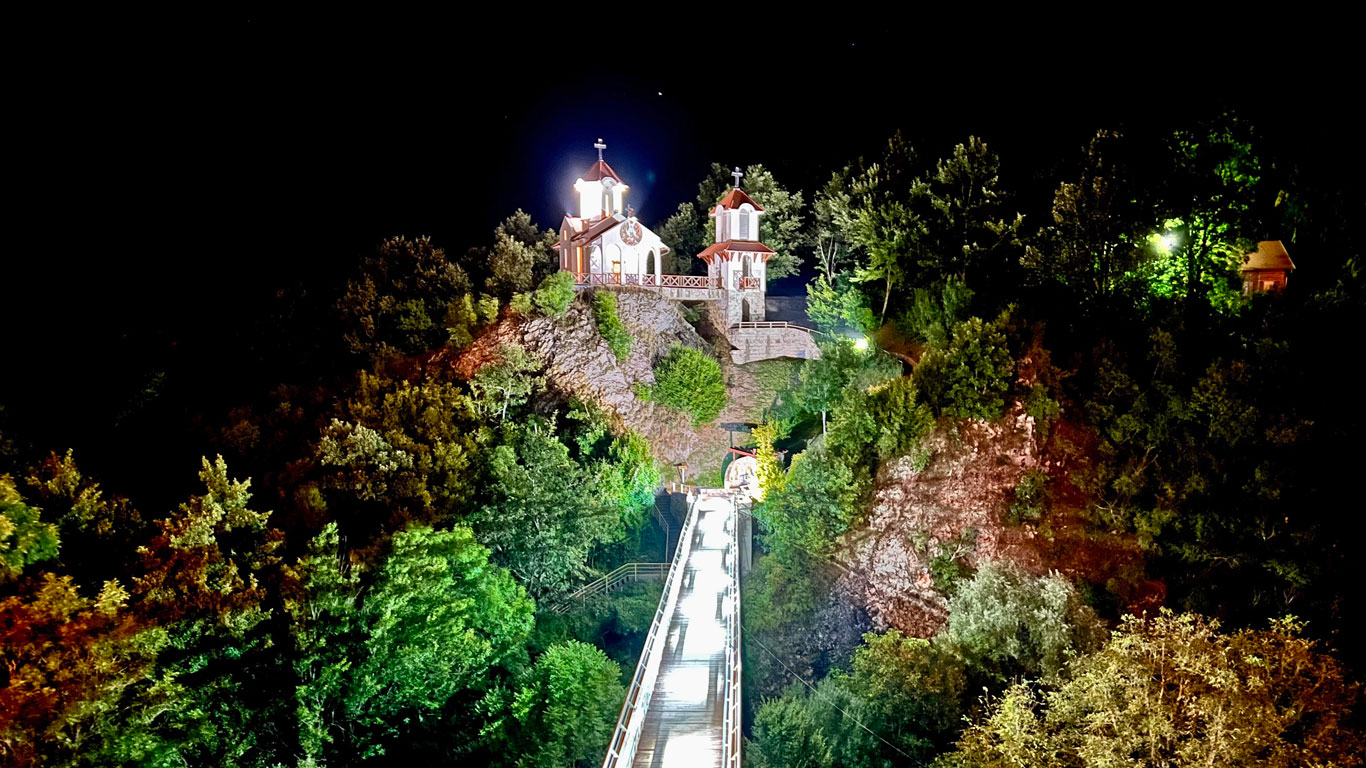
The Church of the Transfiguration of the Lord is located in the very center of Prolom Banja. With the blessing of His Holiness Serbian Patriarch Irinej, who consecrated the foundations of the church, permission was given for the church to be built at this exact location and dedicated to the Transfiguration of the Lord. Construction of the church began in 2010. In 2013, an attractive bridge named the Patriarch Irinej Bridge was built, and in 2014 the painting of the church was completed in accordance with Byzantine iconography.
The Transfiguration of the Lord is one of the greatest Christian holidays and is celebrated on August 19. On this day, the Holy Liturgy is served and wine is blessed. The icon of the Transfiguration depicts Jesus on Mount Tabor surrounded by light, alongside the prophets Elijah and Moses, who appeared after the Transfiguration. At the bottom of the icon lie the three apostles who symbolize love, faith, and hope — Peter, James, and John — frightened and fallen to the ground. According to biblical tradition, Peter said: “Lord, let us make three tabernacles: one for Elijah, one for Moses, and one for You.” Peter’s wish symbolically came to life in Prolom Banja, as this is the only place in Serbia with a Church of the Transfiguration of the Lord and three tabernacles, just as described in the Bible.
At the end of the bridge stands one tabernacle dedicated to the three apostles, represented on three separate icons. On the right is a plaque depicting the Transfiguration of the Lord, while on the left are Elijah in a fiery chariot and Moses holding the Ten Commandments. Walking toward the church, visitors arrive at the bell tower, where Moses’ tabernacle is located. Elijah’s tabernacle is incorporated into the very foundation of the church, while the final tabernacle is the church itself, symbolizing Christ’s tabernacle.
Although small in size, the church is spiritually profound. Visitors to the Church of the Transfiguration of the Lord have the opportunity to pray before frescoes of their saints and family patron saints, since the frescoes combine Serbian and Russian medieval painting styles. In this way, the church itself represents light and joy for every visitor.